
Mission Statement
Our Purpose
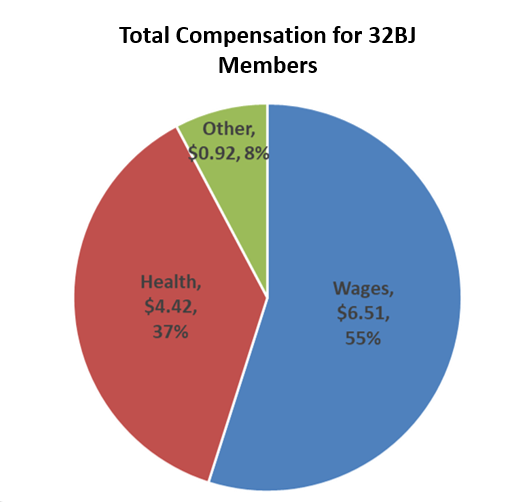
The Coalition for Affordable Hospitals was formed in 2021, by the 32BJ Labor Industry Cooperation Fund, in response to concerns about the significant rise in hospital costs that 32BJ SEIU was seeing in the health fund that provides benefits to its members – the 32BJ Health Fund. The 32BJ Health Fund provides benefits to over 200,000 32BJ SEIU members and their dependents, and is self-funded, which means the premium contributions the employers make go directly into the health fund to pay for healthcare. When 32BJ SEIU bargains for wage increases and benefits, a percentage of that compensation goes towards covering healthcare. Currently, nearly 40 cents of every dollar goes to maintaining the healthcare benefit.
(In 2004, it was only 17 cents of every dollar!) As the cost of that benefit continues to rise, it threatens to squeeze the money available for wage increases and other benefits that 32BJ members fight for.
Click to enlarge photo.
Rising healthcare costs affect everyone, this issue is bigger than high medical bills.
- Small business owners may be forced to downsize or cut benefits.
- Union members watch their health benefit take up more and more of their earnings, leaving less money for other benefits or wage increases.
- Families struggle to budget for medical care, fearing unexpected bills or premium increases.
- Workers watch their healthcare costs outpace earnings at an alarming rate and wonder how they will afford care.
- State and local governments spend hundreds of millions on health benefits every year. That’s taxpayer dollars that could go towards fixing roads or improving public education.
- Patients delay care due to confusion over pricing or the high cost of care. This leads to worse health outcomes and even more expensive care down the line.
Why Hospital Prices?
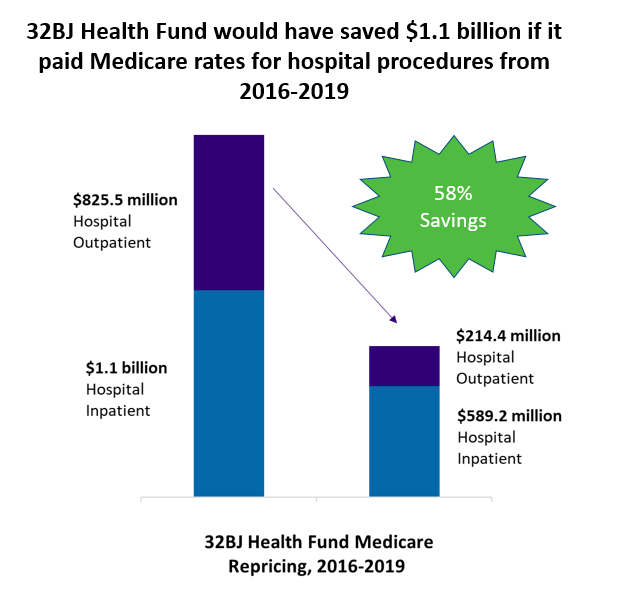
The 32BJ Health Fund analyzed its medical claims data to better understand what was causing the cost of their participants’ health benefit to rise so astronomically. They uncovered that hospital prices are the primary driver of cost increases to the Fund— with 44% of its spend going towards hospital care. Furthermore, they learned that they were paying much more, around 3x more on average, than Medicare pays for the same procedures. If the 32BJ Health Fund had paid Medicare rates for hospital procedures between 2016-2019, they would have saved $1.1 billion over that period as demonstrated in the graph below.
Click to enlarge photo.
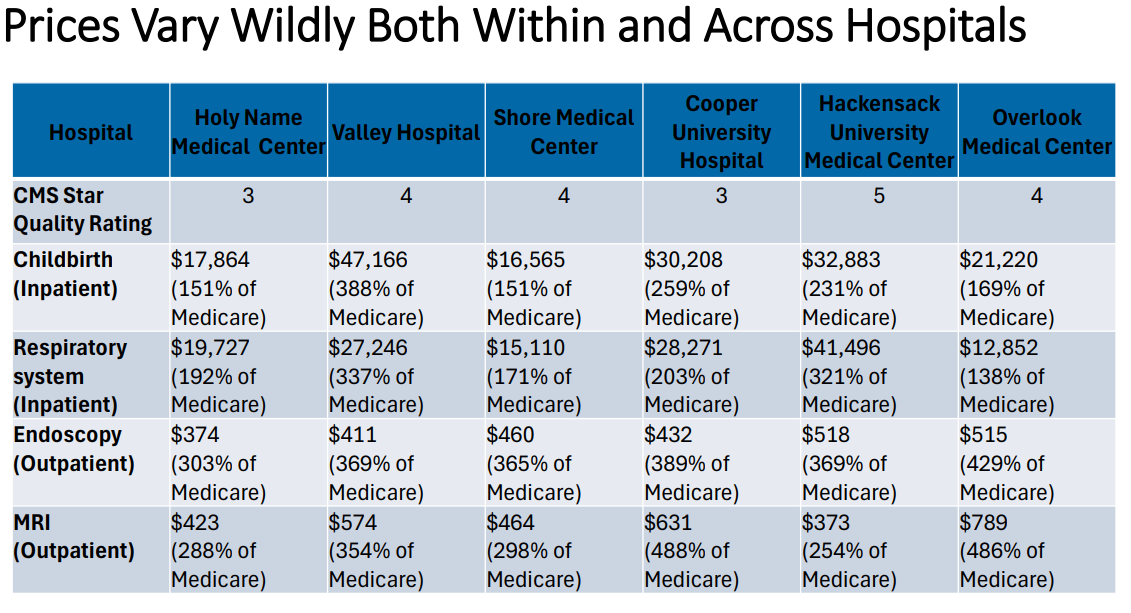
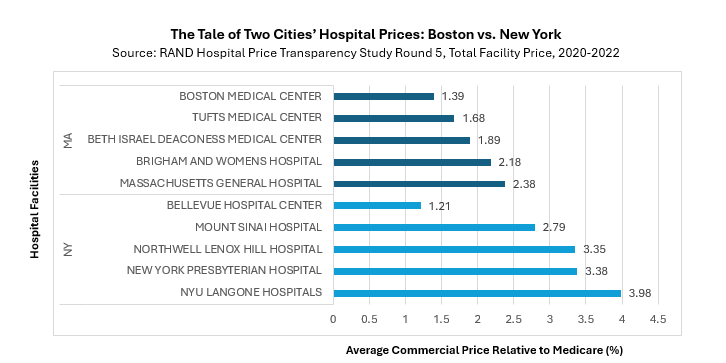
Continued investigation found that there was no correlation between high prices and quality of care. Furthermore, hospitals of the same quality rating had wildly different prices for the same procedures. In New Jersey, one 4-star hospital charges 388% of Medicare for an inpatient childbirth, while another 4-star New Jersey hospital charges 151% of Medicare for the same procedure. These prices also vary wildly within hospitals themselves, with some procedures costing 169% of the Medicare rate, and others costing 486% of the Medicare rate. Other major cities with high quality hospitals, such as Boston, MA, have less varied and lower prices overall, prompting the Fund to ask: “Why is there so much variety?”
Click to enlarge photo.
Click to enlarge photo.
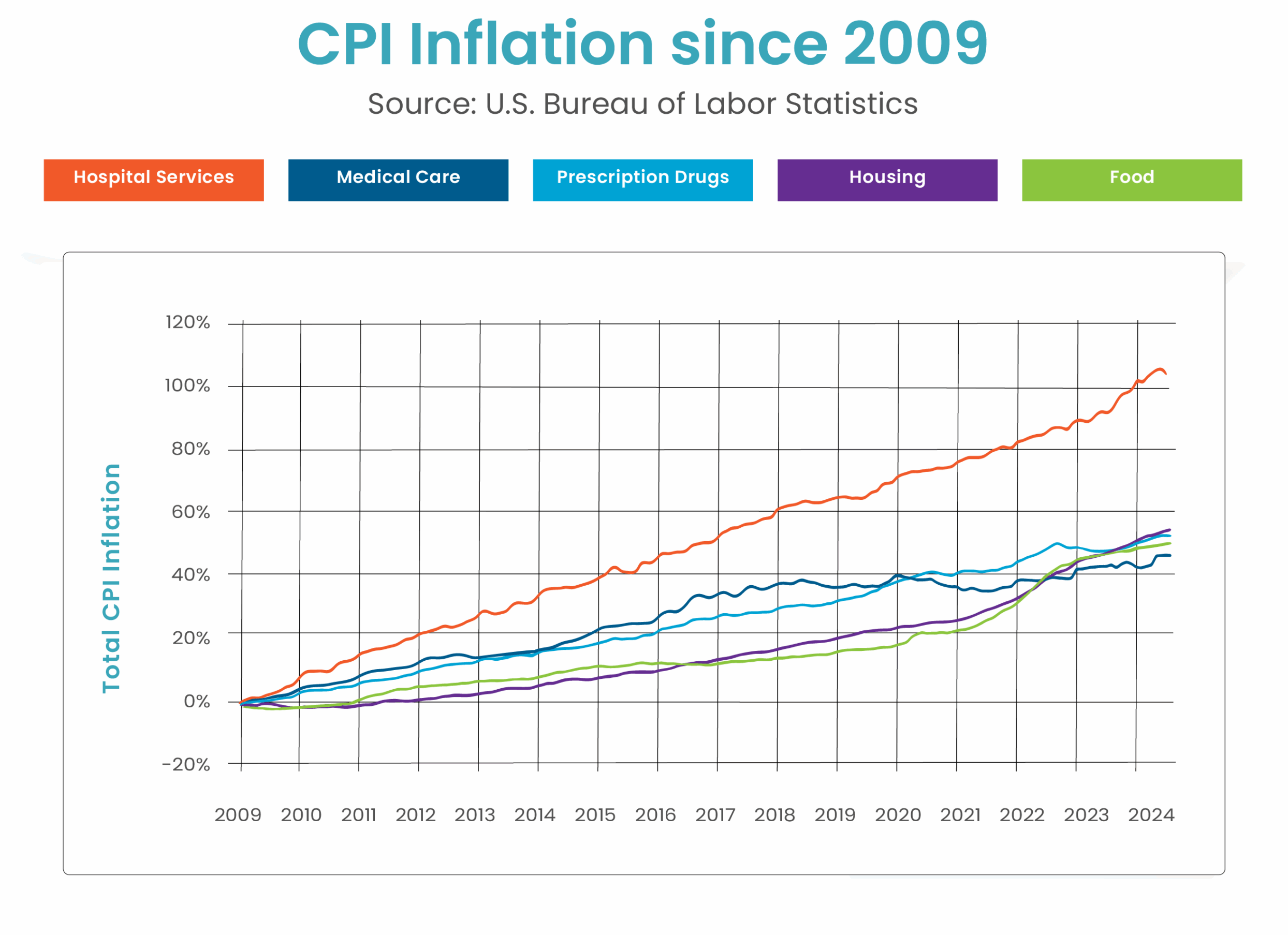
Due to a lack of transparency within the hospital industry, there is not enough information publicly available to explain these discrepancies and pricing trends. In the last 15 years, hospital prices have risen 100 percent compared with 40 to 50 percent for housing and food. This is not sustainable. These out-of-control increases have far reaching downstream effects for patients, employers, payors, and governing bodies. Our Coalition is committed to expanding hospital price transparency, holding the healthcare industry accountable for unsustainable price increases, and implementing cost-saving measures to protect access to affordable healthcare across New York and New Jersey.
Click to enlarge photo.